Bipartisan American Family 🗽 Humancare🩵 Bill Proposals to our United States Congress for Healthcare & Affordable Homes

HumanCare🩵, Universal Healthcare Coverage, Lower Costs, Zero-Down Affordable Homes, 12–15 Millon Jobs, $7.4 Trillion 10-Year Fiscal Surplus
✅ Business-Driven Innovation: Free-market partnerships with tech giants (AWS, Google, IBM, etc.) deliver efficient Responsible AI to cut waste, boost profits, and drive growth, creating 12M jobs and a $6-10 trillion GDP surge.
✅ Healthcare reforms benefit doctors through direct HHS billing, significantly reducing admin burdens by 70%. This allows physicians to dedicate more time to patients, expand their practices, and offer premium "Signature" services.
✅ Builders benefit from streamlined HUD approvals and $0-down, 3% loans up to $250,000, enabling scalable home construction in Hero Villages and contributing to the development of 16M affordable homes. HHS oversees the AI app for bookings, payments, and fraud detection, ensuring compliance and equity; HUD manages loans, appraisals, and zoning to support private ownership. All efforts are grounded in integrity, ethics, and accountability through transparent audits and explainable Responsible AI.
✅ Family-Centered Prosperity: Empowering families with free point-of-use care, land lottery homeownership, and voluntary tools saves $1,667/month per household, prevents 200,000 bankruptcies yearly, and adds 2-5 years to low-income life expectancy. This approach upholds ethical principles of fairness and voluntary participation without mandates.
✅ Sustainable Opportunity for All: Renewable-powered AI data centers and eco-friendly Hero Villages provide resilient housing for essential workers, veterans, and military personnel. This ensures mandate-free equity, bias-free AI, and a fair American Dream for all taxpayers, with built-in accountability mechanisms like human oversight and regular ethical reviews to maintain trust and integrity.
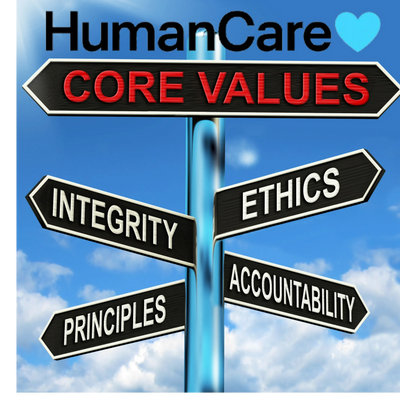

HumanCare🩵 strives to do both 'Capitilism with a boost🚀'


Although bipartisan efforts in Congress may appear uncommon lately, historical records reveal many cases where Democrats and Republicans joined forces to enact major laws.
Advancing the Health Care Act and Housing Care Act is vital for preserving the middle class, and I believe it's achievable.
Here, I've assembled 10 notable examples from various periods, emphasizing key legislation that demanded cross-party collaboration to succeed. These illustrate times when bipartisanship yielded significant results.
The Great Compromise (1787): At the Constitutional Convention (which established Congress's framework), representatives from large and small states agreed on Roger Sherman's plan for a two-chamber legislature: population-based seats in the House and equal state votes in the Senate. This essential agreement facilitated the formation of the U.S. Congress.
Social Security Act (1935): During President Franklin D. Roosevelt's administration, Congress approved this measure to offer aid for retirees, the jobless, and other at-risk populations. It received backing from both parties, creating a fundamental safety net during the Great Depression.
Civil Rights Act (1964): This pivotal law abolished segregation in public spaces and outlawed job discrimination. In the Senate, 27 Republicans allied with 44 Democrats to break a filibuster by Southern Democrats, resulting in its approval through robust bipartisan majorities.
Medicare and Medicaid Act (1965): As part of President Lyndon B. Johnson's Great Society initiative, this created health coverage for seniors (Medicare) and the poor (Medicaid). Republicans contributed essential votes in Congress, enabling passage despite early resistance.
Endangered Species Act (1973): Backed by Democrats such as John Dingell and Harrison Williams under Republican President Richard Nixon, this environmental statute safeguarded endangered wildlife and habitats. It sailed through both houses with strong bipartisan consensus.
Tax Reform Act (1986): Under Republican President Ronald Reagan and a split Congress, this streamlined the tax system, reduced rates, and eliminated deductions. Cross-party talks between Democrats and Republicans secured its enactment.
Americans with Disabilities Act (1990): This rights-focused law barred discrimination against disabled individuals in jobs, public transit, and facilities. Promoted by bipartisan leaders like Republican Bob Dole and Democrat George Mitchell, it gained widespread approval.
No Child Left Behind Act (2001): This educational overhaul stressed accountability and standardized testing. Drafted by Republicans like John Boehner and Democrats like George Miller, with input from Ted Kennedy, it was enacted under Republican President George W. Bush with solid bipartisan support.
First Step Act (2018): This reform to criminal justice lessened mandatory sentences for nonviolent crimes and enhanced prison environments. Driven by cross-party groups, it cleared a polarized Congress and was signed by President Donald Trump.
Infrastructure Investment and Jobs Act (2021): This $1 trillion package supported highways, bridges, internet access, and green energy efforts. Crafted by a bipartisan Senate team, it passed with votes from 19 Republicans in the Senate and 13 in the House amid Democratic control.
These cases underscore how bipartisanship frequently arises in emergencies, around common goals like rights or economic security, or via interpersonal ties among legislators. Though cooperation isn't constant in every Congress, these repeated successes prove it's occurred throughout history. Hopefully The Health Care Act (2025) and the Housing Care Act (2025) will make it a dozen times with the 119th Congress.
HumanCare🩵, Health Care Act of 2026, streamlines federal programs into a patient-centered system on three pillars: universal coverage, responsible AI expanding access, and a national health budget for quality and fiscal responsibility.
It covers hospital, primary/mental care, prescriptions, dental/vision, maternal/child health, emergencies, phased long-term care, and prevention, no premiums/deductibles for essentials. VA and IHS preserved. Unified HHS AI app handles scheduling, telemedicine, navigation, fraud detection, payments with strict privacy.
Providers meet national standards; optional “Signature Doctors” offer transparent premium services. National budget enables global payments, rural/tribal investment, pandemic reserves. Funding: consolidated programs, targeted unhealthy excises, modest FICA adjustment. CBO modeling: ~$7.4T 10-year surplus via admin streamlining, price negotiation, fraud reduction, unified payments - expanding access, strengthening providers, lowering costs.
Housing Care Amendment backs ROAD to Housing Act (S.2651): 2023 taxpayers get 3,500 sq. ft. federal lots (~$100K) via AI lottery. Half repaid to Treasury over 5 years; rest transferable equity for $0-down, 3% HUD loans up to $250K, reducing defaults with collateral. Hero Villages for veterans/essential workers. Creates 12–15M jobs, $4T construction, $6 - 10T GDP impact, $2 - 8T revenue without tax hikes, using <3% federal land. Land/cash options, asset tokenization for faster settlement/broader ownership.
Crises:
▻ ~82K overdose deaths
▻ 27.1M uninsured
▻ $5.6T health spending (~19% GDP)
▻ ~65% home price growth since 2019
▻ $18.6T household debt
Impact: $6–10T GDP growth, 12–15M jobs in health, construction, tech; surpluses for debt reduction, retraining; AI/tokenization drive access, efficiency, transparency.
How:
Health - targeted excises fund care, rides, payments; Signature premiums preserve choice.
Housing - modular builds on federal land with cash/loan options.
